Outdoor Roundup
Best binoculars for birdwatching: 3 researched 8x42 picks
What are the best binoculars for birdwatching?
For general birdwatching, start by trying an 8x42 pair. Nikon Prostaff P7 offers 20.2 mm eye relief; Vortex Diamondback HD focuses to 5 feet; Celestron Nature DX offers 2 m close focus. Fit and a steady view matter more than choosing the highest magnification.
Should you buy binoculars for birdwatching from this guide?
Start with the Nikon Prostaff P7 8x42, our top pick at 9.1/10. Our first pair to try for general birdwatching: the published 20.2 mm eye relief is the longest of these three, and the body weighs 590 g. Check the full view while wearing your own glasses. The Vortex Diamondback HD 8x42 (8.9/10) is the strongest alternative.
How do we choose binoculars for birdwatching?
Specification review updated September 8, 2026, using Nikon, Vortex, Celestron and RSPB guidance. We have not tested these binoculars hands-on. Scores are our editorial assessments for general birdwatching, prioritising eye relief, carrying weight and everyday usability; they are not optical measurements or Amazon customer ratings.
Which pick is right for you?
Match the badge to the job, then read the product card. Scores are ours (0–10), not Amazon stars, and they do not change with commission.
| If you need | Start here | Why |
|---|---|---|
| Start here for eye relief | Nikon Prostaff P7 8x42 | Our first pair to try for general birdwatching: the published 20.2 mm eye relief is the longest of these three, and the body weighs 590 g. Check the full view while wearing your own glasses. |
| Consider for closer subjects | Vortex Diamondback HD 8x42 | Its stated 5-foot close focus is the shortest of this shortlist. That makes it a candidate for watching nearby subjects as well as distant birds; test eye comfort before buying. |
| Alternative with 2 m close focus | Celestron Nature DX 8x42 | An alternative to compare at the current retailer price, with 17.5 mm eye relief, 2 m close focus and fully multi-coated optics. Its published 705 g weight is the main carrying tradeoff. |
Top 3 at a glance
Compare the options- #1Start here for eye relief
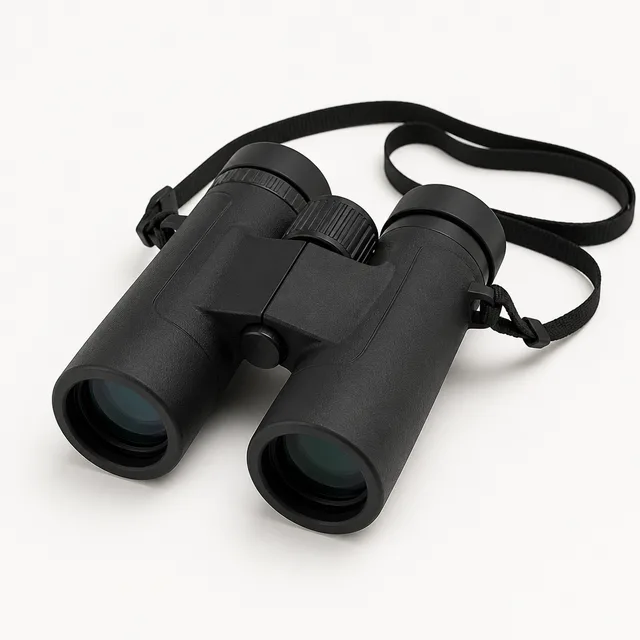
Nikon Prostaff P7 8x42
Check price on Amazon* - #2Consider for closer subjects
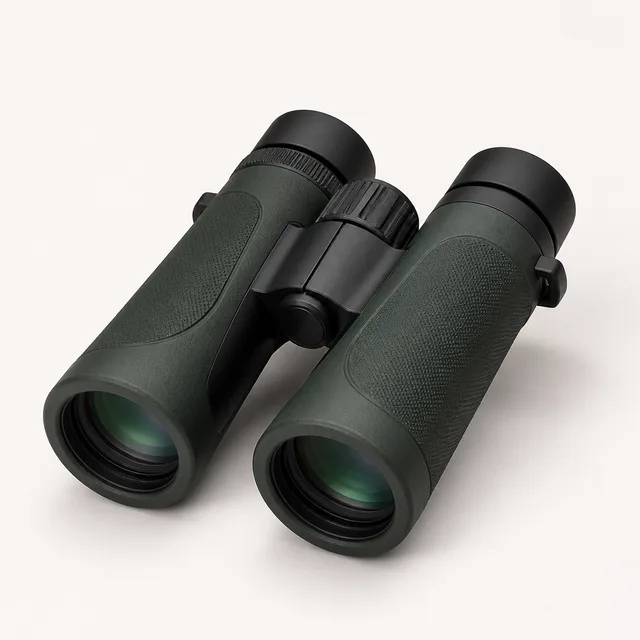
Vortex Diamondback HD 8x42
Check price on Amazon* - #3Alternative with 2 m close focus
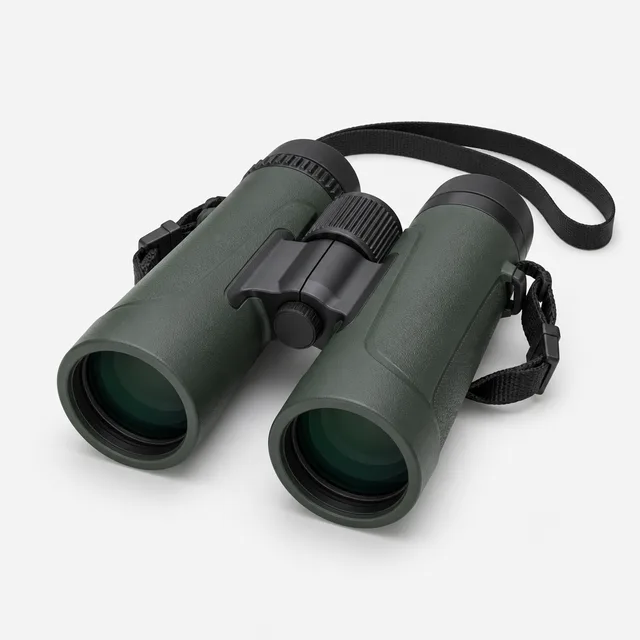
Celestron Nature DX 8x42
Check price on Amazon*
Nikon Prostaff P7 8x42
Amazon UK
Our first pair to try for general birdwatching: the published 20.2 mm eye relief is the longest of these three, and the body weighs 590 g. Check the full view while wearing your own glasses.
Skip if you need focus closer than its stated 3 m minimum
Why it's a good thing: A locking dioptre adjustment helps retain your setting between outings.
- 20.2 mm published eye relief
- Locking dioptre adjustment
- 590 g body weight
- You need focus closer than its stated 3 m minimum
- Full-size 42 mm design is not pocket-sized
Vortex Diamondback HD 8x42
Amazon UK
Its stated 5-foot close focus is the shortest of this shortlist. That makes it a candidate for watching nearby subjects as well as distant birds; test eye comfort before buying.
Skip if you need more than its stated 17 mm eye relief
Why it's a good thing: Vortex publishes a VIP warranty; check the current terms and the service route for your country.
- 5-foot published close focus
- 7.5-degree angular field of view
- Waterproof and fogproof specification
- You need more than its stated 17 mm eye relief
- Warranty arrangements need checking for your country
Celestron Nature DX 8x42
Amazon UK
An alternative to compare at the current retailer price, with 17.5 mm eye relief, 2 m close focus and fully multi-coated optics. Its published 705 g weight is the main carrying tradeoff.
Skip if you want the lightest pair in this shortlist
Why it's a good thing: A familiar fixed-magnification design; check caps, eyecups and the strap when assessing a used pair.
- 2 m published close focus
- 17.5 mm published eye relief
- Waterproof and nitrogen-filled
- You want the lightest pair in this shortlist
- 705 g stated weight may feel substantial on a long walk
Which binoculars should you try first?
Start with the Nikon Prostaff P7 8x42 if a comfortable view with glasses is your priority. Consider the Vortex Diamondback HD 8x42 for its shorter close focus. Compare the Celestron Nature DX 8x42 if its current price and fit appeal to you.
These are three options to try, not a claim that one model will suit every person. Our ordering favours eye relief and carrying comfort for ordinary birdwatching. If nearby insects or flowers are your main interest, the closer-focusing alternatives may suit you better. None of the scores represents a measured laboratory result.
What do 8x42 and 10x42 mean?
The first number is magnification; the second is the objective lens diameter in millimetres. An 8x42 pair combines eight-times magnification with 42 mm objectives.
The RSPB’s buying guide recommends considering 8x or 10x for birdwatching. It suggests 8x for woodland and poorer light, while 10x may help across open country or water. Greater magnification can make hand movement more apparent. Try both if you are unsure.
A useful calculation is objective diameter divided by magnification: 42 ÷ 8 gives a 5.25 mm exit pupil. For 10x42, it is 4.2 mm. That explains part of the design tradeoff, but it is not a measurement of image quality. Coatings, your eyes, ambient light and optical construction also matter.
How do the specifications compare?
The figures below are manufacturers’ published specifications, checked on September 8, 2026. They describe the exact 8x42 models, not every binocular in each product family.
| Model | Eye relief | Close focus | Published weight |
|---|---|---|---|
| Nikon Prostaff P7 8x42 | 20.2 mm | 3 m | 590 g |
| Vortex Diamondback HD 8x42 | 17 mm | 5 ft | 21.8 oz |
| Celestron Nature DX 8x42 | 17.5 mm | 2 m | 705 g |
Sources: Nikon specifications, Vortex specifications and Celestron specifications. Weight definitions and included accessories can differ, so treat small differences cautiously.
How should you check fit before buying?
Bring your usual glasses to a shop or demonstration. Adjust the eyecups and the distance between the barrels until the view forms one comfortable circle. Look at a stationary object first, then try finding a moving subject.
Give the focus wheel several turns and check whether you can use it comfortably. Hold the binoculars for more than a moment. A model that feels fine on a counter may feel different when held at eye level. Check that your fingers reach the controls without a strained grip.
The best specification on paper cannot tell you whether a particular pair fits your face. The RSPB’s beginner guidance points readers towards opportunities to try optics before choosing.
Should you buy new, used or nothing yet?
For an occasional outing, borrowing a pair is a useful first step. You can learn which size you enjoy carrying before committing to a purchase. Watching birds from a window or public path also helps you practise observation without buying equipment.
If buying used, ask to inspect the lenses, hinge, eyecups and focus controls. Check for an uncomfortable double image and seek specialist advice if alignment seems wrong. Confirm which accessories are included and whether a return is possible. Avoid assuming a warranty follows every second-hand purchase.
For a new pair, check the exact model name, seller, returns terms and local warranty support. The Amazon links on this page open searches for the named products; they do not verify a particular seller, live stock or the lowest available price. Choose the correct 8x42 model when browsing the results.
How can observation support your interest in nature?
Our environment stories follow conservation and habitat recovery. Binoculars can help you observe from an established viewing point while keeping your distance. They are optional equipment, and purchasing them does not itself fund a conservation project through this site.
Read local reserve guidance, respect closed areas and give wildlife space. A more detailed view is a reason to stay back, not to approach a nest. Keep a simple note of what you saw, where you were and what you were uncertain about; useful observation starts with accurate records.
What changed in this update?
We narrowed this guide to three models with directly linked manufacturer specifications. We removed unsupported Amazon review totals, price bands and promotional offer claims, and replaced broad endorsements with specific comparisons. We also removed an imprecise claim about the Nikon’s glass: the manufacturer’s cited specification is the reference for what this model contains.
This remains a researched guide, not a hands-on optical test. Future changes should follow new evidence, product revisions or clearer information about service and support.
How we choose
Specification review updated September 8, 2026, using Nikon, Vortex, Celestron and RSPB guidance. We have not tested these binoculars hands-on. Scores are our editorial assessments for general birdwatching, prioritising eye relief, carrying weight and everyday usability; they are not optical measurements or Amazon customer ratings. This is a research-based review, not a hands-on lab test.
Our values filter: We favour brands with repair services, recycled or certified materials, and documented conservation funding.
Prices change — check the retailer for today's price.
Common questions
- Are 8x42 binoculars a good starting point for birdwatching?
- They are a useful starting point for general birdwatching. Eight-times magnification is usually easier to hold steady than higher magnification. Try the fit, focus and view before buying.
- Which of these binoculars has the longest eye relief?
- Nikon publishes 20.2 mm for the Prostaff P7 8x42, compared with Celestron’s 17.5 mm and Vortex’s 17 mm. Eye relief alone does not guarantee a comfortable view with your glasses.
- Have you tested these binoculars or checked live Amazon prices?
- No. This is a comparison of published specifications with editorial assessments. Amazon links open product searches; check the exact model, seller, price and returns terms before buying.